

TellGate
Location-Based Event Discovery & Sports Community Interaction Architecture
Core System Concept
TellGate is a location-aware event coordination platform designed for stadium sports fans, concert-goers, and event tailgaters. The platform bridges the gap between fans setting up tailgate equipment in stadium lots (such as Finley Stadium in Chattanooga, Tennessee) and attendees looking to discover nearby pre-game gatherings.
Konstant Variables conducted the strategic product discovery, information architecture, and high-fidelity interaction modeling to validate the system before committing software engineering capital:
Stadium Fan Tailgate Discovery & Community Interaction Model
The Product Discovery Challenge
Tailgating is a central part of American sports culture. Hosts invest thousands of dollars in equipment—heavy-duty steel frame tents, 44” HD televisions, 900W generators, sound systems, and lawn games like cornhole. However, coordinating these events has historically relied on fragmented group texts and imprecise parking lot landmarks.
The project faced three fundamental product design challenges:
- Ephemeral Time Windows: Tailgates exist only during narrow 2- to 3-hour pre-game windows. Stale or delayed event listings result in fans arriving at empty parking spaces.
- Unstructured Amenity Data: Hosts describe their setups in freeform text, making it difficult for fans to filter by essentials like power access, shaded seating, or food provisions.
- Multi-Role Privacy Boundaries: Hosts need fine-grained controls to distinguish between open public tailgates and private, friends-only gatherings.
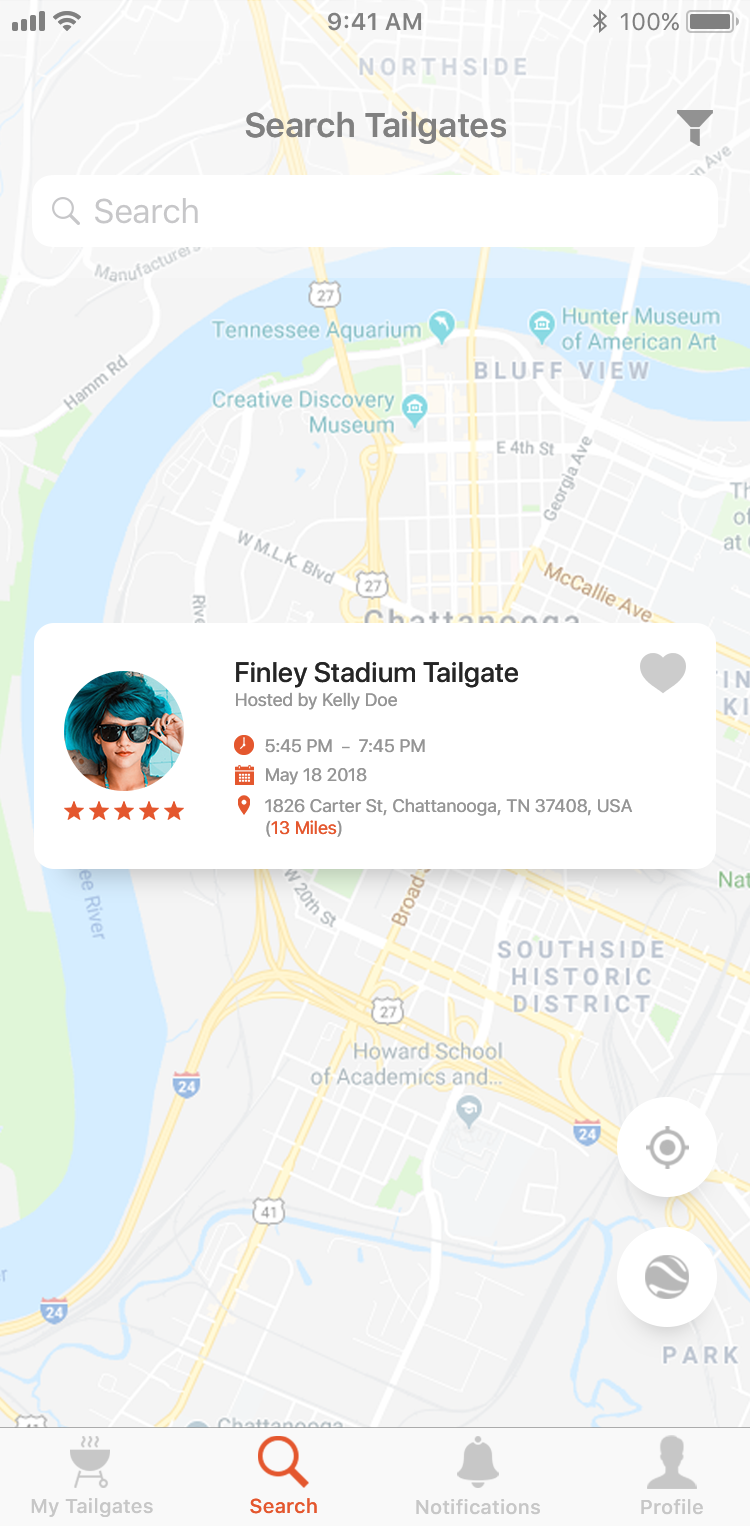
Technical & Interaction Architecture
The discovery engagement defined four foundational architecture pillars:
1. Geospatial Discovery & Ephemeral Time-Boxing
Because tailgates exist only for a few hours before kickoff, the information architecture places time decay at the center of the discovery algorithm.
- Proximity calculations prioritize events within walking or short driving distance of the stadium.
- Tailgates automatically transition from Pre-Event (RSVP & coordination) to Live (active map pin) to Post-Event (photo galleries and host reviews) based on schedule timestamps.
2. Structured Amenity & Gear Schemas
To solve the unstructured text problem, the data schema normalizes physical equipment into discrete attributes:
- Power & Electronics: Generator capacity, screen dimensions, audio output.
- Shelter & Comfort: Tent dimensions, seating capacity, heaters, coolers.
- Entertainment: Bag toss/cornhole, grills, team-specific fan themes.
This schema enabled simple search filtering without requiring users to parse lengthy descriptions.
3. Multi-Role Social Graph & Privacy Permissions
The permission model supports three distinct relationship tiers:
- Public Attendees: Can search stadium map pins, view public equipment lists, and RSVP.
- Direct Friends: Can view private location coordinates, directly message hosts, and receive automatic notifications when a friend hosts a tailgate.
- Hosts: Full administrative rights to edit gear lists, accept RSVPs, and post post-game photo updates.
4. Clickable Prototyping & Scope Validation
Using InVision, the team translated paper wireframes into interactive prototypes. Testing clickable flows with target users revealed friction points in the RSVP sequence, allowing the team to prune non-essential social features and focus the interface on core discovery and amenity verification.
Architectural Principles Learned
- Discovery de-risks software architecture: Testing multi-role permission models on clickable wireframes costs a fraction of building and refactoring distributed cloud backends.
- Ephemeral events require time-aware data structures: Standard event databases assume long lifespans. Systems designed for multi-hour events must incorporate aggressive cache invalidation and automatic lifecycle transitions.
- Structured schemas outperform freeform text in search: Normalizing physical amenities into filterable attributes is essential for high-intent geospatial discovery.